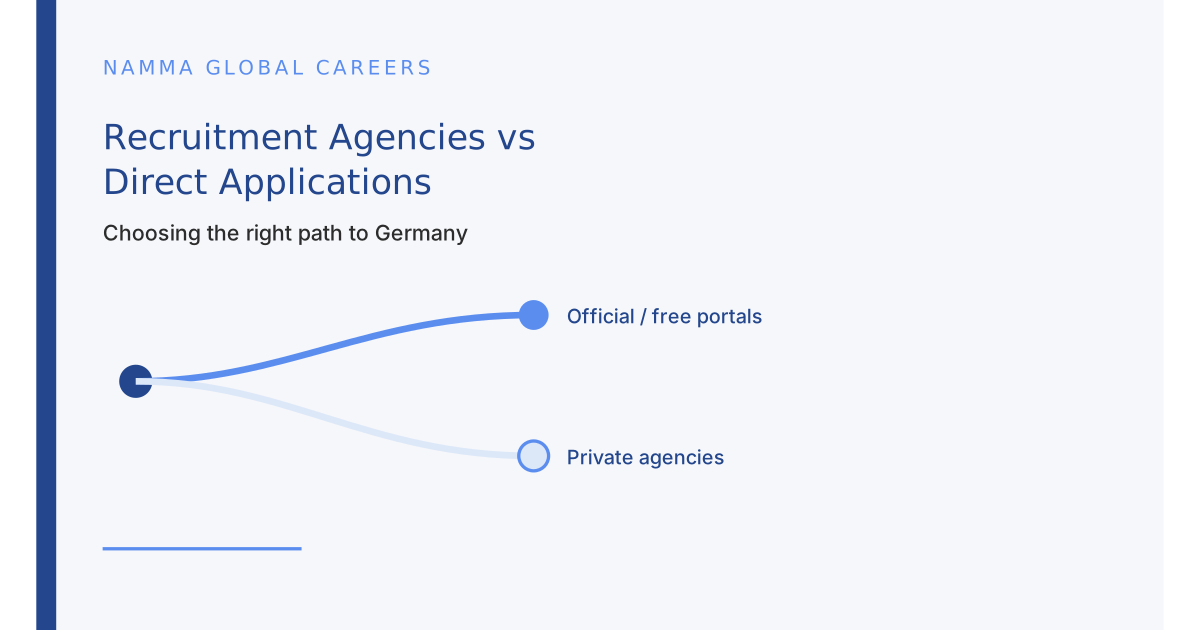
One of the most common points of confusion for nurses planning a move to Germany is whether it's acceptable for a recruitment agency to charge them anything at all. The honest answer is more nuanced than most people expect, and understanding it properly can save you from both unnecessary suspicion of legitimate agencies and, more importantly, from genuinely predatory ones.
The Free, Government Route
Germany's Federal Employment Agency, along with EURES and the Make it in Germany portal, provides job placement services entirely free of charge to jobseekers. This is written directly into German law, placement through the state employment service is a statutory entitlement, not a paid service, for anyone who follows the standard process.
If cost is your main concern, starting through these official channels means you are never expected to pay anything for the placement itself.
Private Agencies Are Allowed to Charge You, and That's Not Automatically a Red Flag
Here is the part that surprises most people. German law was changed back in 2002 specifically to allow private placement agencies to charge fees directly to jobseekers, not only to employers, as had been the rule before. This means a private agency legally charging you a placement fee is not, by itself, evidence of a scam.
What the law does require is a proper written placement contract, a Vermittlungsvertrag, which must clearly state the nature of the service, the fee structure, and the commission amount. An agency that avoids putting this in writing, or is vague about the fee structure, is the actual warning sign, not the mere existence of a fee.
Even Official Sources Tell You to Ask About Costs Upfront
It's worth noting that even Germany's own official EURES guidance, while listing private placement agencies as a legitimate alternative to the free government route, specifically advises jobseekers to "enquire in advance about charges" before using one. This is a direct, official acknowledgment that costs vary and should be clarified before you commit, not a warning against private agencies as a category.
A Special Protection Worth Knowing About
There is one context where German law is very clear that a worker should never bear a placement cost. When the Federal Employment Agency itself arranges cross-border recruitment through official bilateral agreements with another country's employment authorities, the law explicitly prohibits the employer from passing any part of that arrangement's cost onto the worker being placed, whether directly or indirectly. This is a meaningful protection specifically relevant to structured, government-linked international recruitment pathways.
So How Should You Actually Choose?
Think of it less as "agency versus government" and more as a spectrum of transparency. The free government channels, Make it in Germany, EURES, and ZAV, carry zero cost and zero ambiguity, since there's simply nothing to negotiate. A private agency can be a perfectly legitimate option too, provided everything is in writing, the fee structure is clear before you commit to anything, and you understand exactly what you're paying for and when.
What should give you pause is the opposite of all this, verbal-only promises, vague or shifting fee explanations, or pressure to pay before any written agreement exists. None of that reflects how legitimate recruitment, private or government, actually operates under German law.
Where This Fits Into Your Overall Plan
Whichever route you use to actually connect with an employer, the underlying preparation stays the same, your language level, your documents, and your qualification all need to be genuinely ready regardless of which channel brings you the job offer. Choosing between an agency and a direct application is really a question of which route fits your situation, not a shortcut around the preparation itself.

Written by
Dr. P. K. Dhanasekaran
Head of India Operations, Namma Global Careers
Trying to decide between an agency and applying directly? Message us on WhatsApp and let's map out the right path for you.
Chat on WhatsApp